Legendary Ladies of Park Square
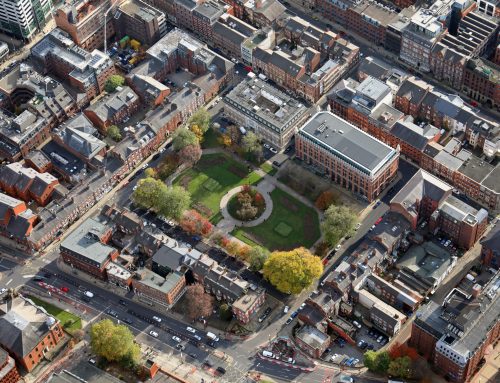
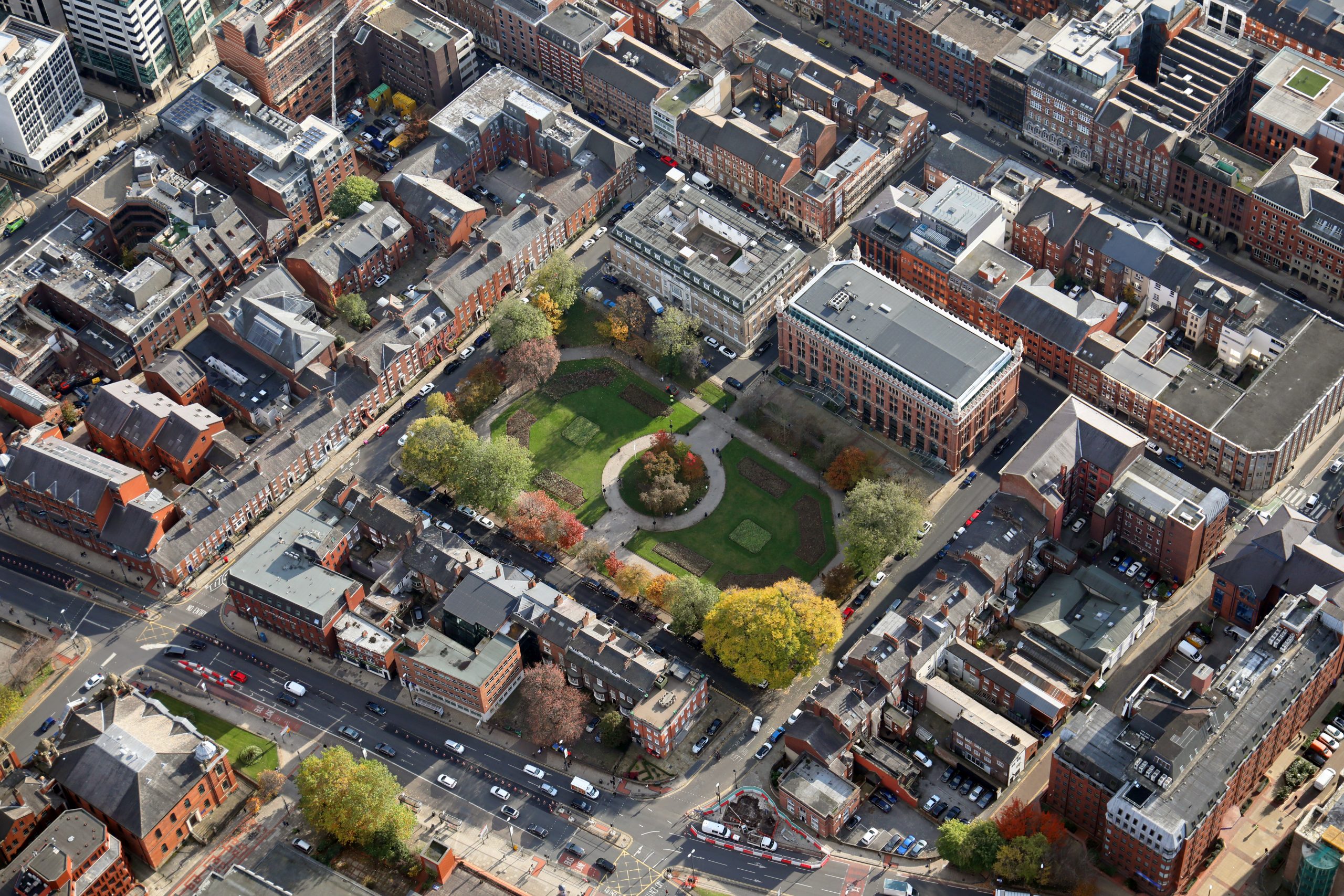
Park Square is a tranquil green haven surrounded by Georgian buildings, nestled in the vibrant heart of Leeds City Centre. As March marks Women’s History Month, we want to shine a spotlight on some of the legendary ladies of Park Square.
A brief history of Park Square
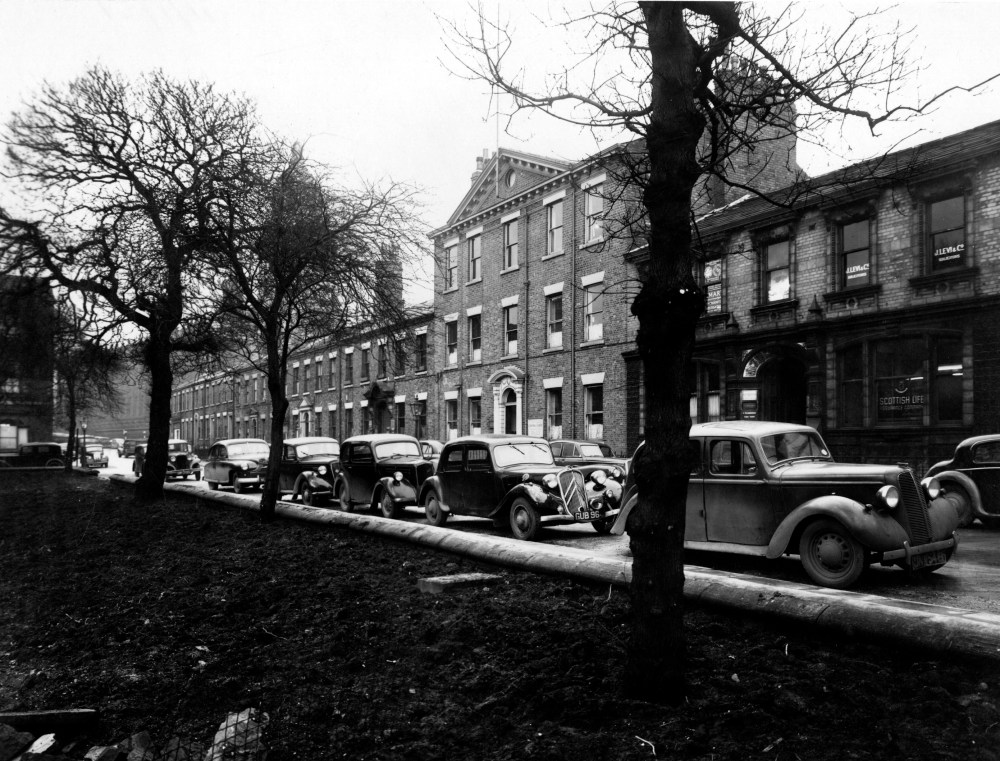
Park Square in Leeds city centre was built between 1788 and 1810. Developed as an exclusive residential area, it featured private gardens reserved for its privileged residents. The square was designed with the city’s elite in mind. It was home to merchants, members of the clergy, lawyers.
During the Victorian era, Park Square was a centre for medical practitioners who were involved in the development of the Leeds School of Medicine (1831). The Square was once called the Harley Street of the North due to the large number of doctors holding offices there.
Fast-forward to the 1900s, and Park Square became known for its barristers and solicitors whose offices dotted the area. More recently, there’s been a resurgence of the medical community, as new clinics and practices have opened their doors, bringing the square’s story full circle.
Legendary Ladies of Park Square
Edith Pechey
Dr Edith Pechey, born in England in 1845, worked as a governess and teacher until 1869. She joined the Edinburgh Seven, becoming one of the first seven female undergraduate medical students at any British university. She was Yorkshire’s first woman doctor and had her consulting rooms in Park Square from 1877 to 1883. During her time in Leeds, Dr Pechey opened a free dispensary in Holbeck which was entirely staffed by women.
After leaving Park Square, Dr Pechey moved to India and started training programmes for women at the Cama Hospital in Mumbai. She worked tirelessly to counteract prejudices against women and made the case for equal pay and opportunities for female medical workers.
You can read more about Dr Pechey’s remarkable career on Wikipedia.
You can find a blue plaque dedicated to Dr Pechey a 8 Park Square East in the centre of Leeds.
Eliza Stafford
The Dripping Riot of 1865
A decade before Dr Pechey opened her consulting rooms, 8 Park Square was home to the surgeon and magistrate Henry Chorley. In 1865, Chorley discovered that his cook, Eliza Stafford, was stealing dripping from his kitchen. He pressed charges, and on 23rd January 1865, local magistrates found Eliza guilty of stealing 2lb of dripping, sentencing her to one month in Armley Gaol.
Sympathy for Eliza surged, and people heckled Chorley, chanting “dripping, dripping”, whenever he appeared in public. On the morning of her release, on 22nd February, thousands gathered at the prison gates to greet her. The police had feared a disturbance so Eliza left prison at 7am by a back door. When the crowds discovered that she’d gone, they made their way to Henry Chorley’s residence at 8 Park Square.
The crowd grew, throwing bricks at police and smashing windows. The disturbance continued throughout the day with police from Bradford and military assistance requested to control the crowd. By mid-afternoon, police charged at the crowd and moved them entirely out of Park Square resulting in the trampling of George Hodson.
You can read more about the Dripping Riot of 1865 here.
For more legendary Leeds ladies, check out this Secret Library – Leeds Libraries Heritage Blog!